

A Night That Changed the Mood
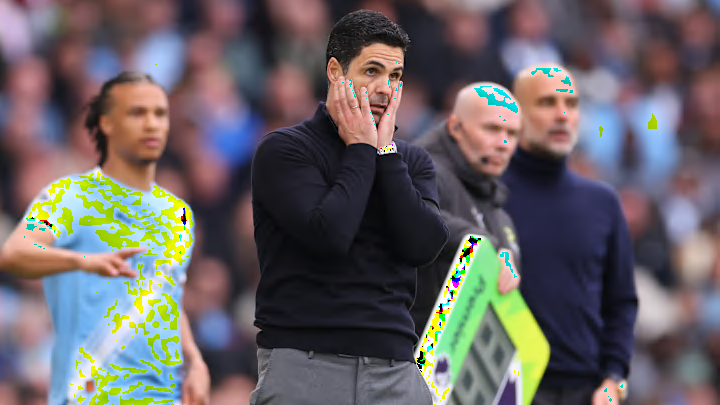
When the final whistle sounded at the Etihad Stadium, Mikel Arteta moved through the wreckage of another painful near-miss, consoling players whose faces reflected the agony of opportunity lost. Above him, from the Manchester City stands, a banner descended with theatrical cruelty: “Panic on the streets of London.”

It was more than mockery. It was a message. Arsenal’s grip on the title race, once firm and convincing, suddenly feels fragile.
Manchester City’s 2-1 victory was not decisive in mathematics, but football is often shaped less by numbers than by momentum. Arsenal still lead the Premier League. They remain alive in the Champions League. Yet the emotional balance of power has shifted. The hunter now looks relentless, while the hunted appear uneasy.
Arsenal Were Good — But Good Was Not Enough
For long spells of a thrilling contest, Arsenal matched City stride for stride. They showed courage in possession, discipline in defence, and enough attacking intent to trouble the reigning champions.
This was not a timid surrender. It was not a collapse. It was not the performance of a side overwhelmed by pressure.

That may be what makes the defeat more painful.
Arsenal played well enough to take something from the game, but elite football does not reward effort alone. It rewards ruthlessness. Erling Haaland supplied it once more. Arsenal, by contrast, missed their moments — none more glaring than Kai Havertz’s late headed chance over an open goal.
At this stage of the season, quality matters. But efficiency matters more.

The Growing Shadow of the ‘Nearly Man’
History can be unforgiving to those who repeatedly come close. It rarely preserves nuance. It remembers trophies, not near-misses.
If Arsenal finish second for a fourth consecutive season, Arteta risks acquiring football’s harshest label: the nearly man.
That would feel severe, but it would not be entirely unfair.
Arteta has rebuilt Arsenal magnificently. He restored standards, identity, belief, and relevance. He turned a drifting giant into a genuine contender again. The Emirates breathes ambition because of him.
But modern elite management is judged not only by reconstruction, but by silverware.
Progress is praised — until expectation arrives.

Questions That Will Not Disappear
Should another season end without trophies, scrutiny will intensify. Legitimate questions are already forming:
- Why did Arsenal fade in decisive moments?
- Why was a major summer striker signing left out of the biggest domestic game of the season?
- Why has fluency given way to tension in recent weeks?
- Why do Arsenal keep falling inches short when titles demand certainty?
These are not calls for Arteta’s dismissal. They are the natural questions facing any club now operating at the summit of the game.
Arsenal are no longer rebuilding. They are expected to win.
Arteta’s Response: Defiance Over Despair
To his credit, Arteta refused panic after the match. He reminded everyone that Arsenal still hold the advantage with games remaining and insisted the title race is far from finished.
Publicly, that is leadership. Managers cannot afford visible doubt.
Privately, however, Arteta knows title races are won in the mind as much as on the pitch — and Manchester City have made psychological dominance an art form.
They know how to stalk.
They know how to close.
They know how to suffocate hope.
The Weeks That Will Define Everything
The remainder of this season may shape more than Arsenal’s title hopes. It may shape how Arteta is remembered.
If he leads Arsenal to the Premier League crown or Champions League glory, he enters a different tier of managerial history. He becomes the man who restored Arsenal and delivered greatness.
If he falls short again, the noise will grow louder.
Nearly good enough.
Nearly there.
Nearly champions.
Final Verdict
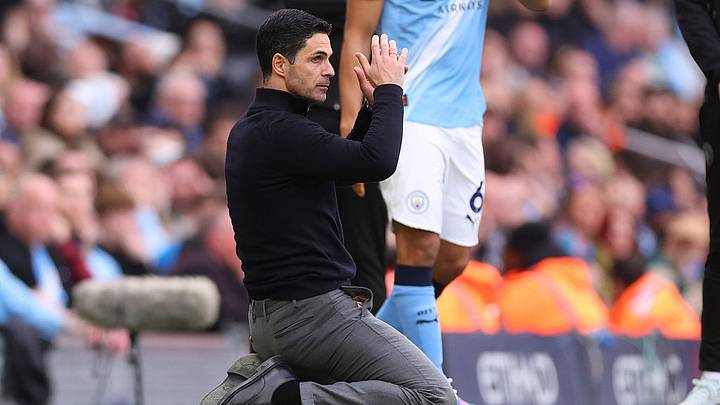
Mikel Arteta has done the hard part: he rebuilt Arsenal into contenders.
Now comes the hardest part of all — finishing the job.
Because in football, admiration is temporary. Silverware is permanent.


