

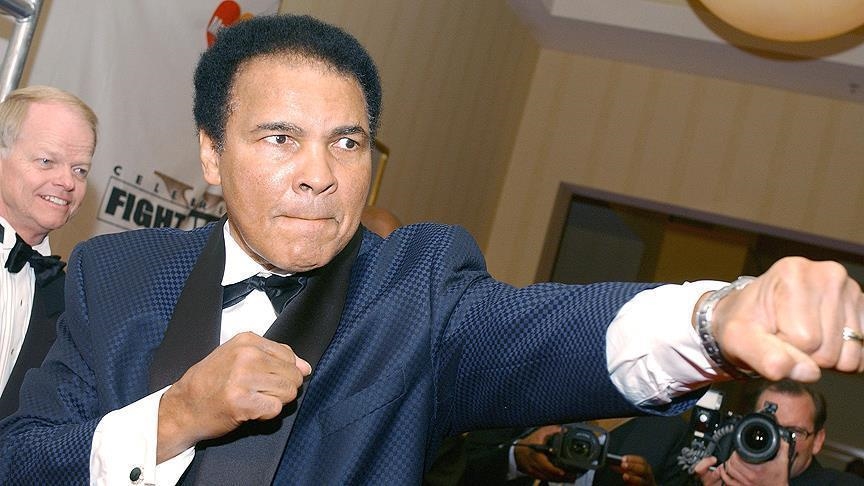
In the world of sports, there are few individuals whose impact transcends their respective disciplines, leaving an indelible mark on history. Muhammad Ali, born Cassius Clay Jr., was undoubtedly one such figure. Regarded as “The Greatest,” Ali was more than just a boxing legend; he became a symbol of strength, resilience, and unwavering conviction. Even after his passing, his legacy continues to inspire and influence generations. This article delves into the life and career of Muhammad Ali, exploring the essence of his greatness and the lasting impact he has had on the sporting world and beyond.

A Fighter Inside and Outside the Ring:
Muhammad Ali’s rise to prominence began with his gold medal win at the 1960 Olympics in Rome, where he first caught the attention of the boxing world. Known for his lightning-fast footwork and unparalleled agility, Ali’s boxing prowess was matched only by his charismatic personality. However, it was his unyielding determination and his willingness to use his platform to advocate for social justice that truly set him apart.
Ali’s refusal to be drafted into the Vietnam War on the grounds of his religious beliefs and opposition to racial inequality sparked a firestorm of controversy. His decision led to a three-year suspension from boxing, during which he relinquished his heavyweight title and endured significant personal and professional hardship. Yet, Ali remained resolute in his convictions, showing the world that he was more than just an athlete – he was a champion of justice and civil rights.

The Thrilla in Manila and the Rumble in the Jungle:
Ali’s in-ring battles were legendary, showcasing his exceptional skill and endurance. Two of his most iconic fights were the Thrilla in Manila and the Rumble in the Jungle.
In 1974, Ali faced George Foreman in the Rumble in the Jungle, held in Kinshasa, Zaire (now the Democratic Republic of Congo). Ali, considered the underdog, employed his now-famous “rope-a-dope” strategy, absorbing Foreman’s powerful punches while conserving energy. In the eighth round, Ali launched a fierce counterattack, delivering a knockout blow that shocked the world and regained him the heavyweight championship. This fight epitomized Ali’s resilience and tactical brilliance, cementing his status as one of boxing’s all-time greats.

The Thrilla in Manila, held in 1975, pitted Ali against his fierce rival Joe Frazier in a grueling contest that pushed both fighters to their limits. The brutal encounter saw Ali emerge victorious after Frazier’s corner threw in the towel before the final round. The fight showcased Ali’s unyielding spirit and willingness to endure extreme physical hardship in pursuit of victory.
Legacy and Impact
Muhammad Ali’s impact extended far beyond the realm of boxing. He was an advocate for social justice, using his platform to speak out against racial discrimination and inequality. Ali’s steadfast commitment to his principles inspired countless individuals, both inside and outside of sports, to stand up for what they believed in. His words, “I am the greatest, I said that even before I knew I was,” resonated with people around the world, encouraging them to embrace self-confidence and challenge the status quo.
Beyond his athletic achievements and activism, Ali’s larger-than-life personality made him a global icon. He transcended borders, cultures, and generations, captivating audiences with his charisma and wit. Ali’s unmatched showmanship brought an electrifying energy to the sport of boxing, forever changing the way it was perceived and promoted.

Ali’s Legendary Quotes:
- “Float like a butterfly, sting like a bee. The hands can’t hit what the eyes can’t see.”
- “I am the greatest. I said that even before I knew I was.”
- “Don’t count the days; make the days count.”
- “Service to others is the rent you pay for your room here on Earth.”
- “It’s hard to be humble when you’re as great as I am.”
- “I’m not the greatest, I’m the double greatest. Not only do I knock ’em out, I pick the round.”
- “Champions aren’t made in the gyms. Champions are made from something they have deep inside them—a desire, a dream, a vision.”
- “If you even dream of beating me, you’d better wake up and apologize.”
- “He who is not courageous enough to take risks will accomplish nothing in life.”
- “I hated every minute of training, but I said, ‘Don’t quit. Suffer now and live the rest of your life as a champion.'”
Conclusion
Muhammad Ali, “The Greatest,” remains an immortal figure in the world of sports and beyond. His exceptional boxing skills, unwavering determination, and unapologetic advocacy for justice have solidified his place as an icon of the 20th century. Ali’s legacy is not merely confined to his in-ring accomplishments but extends to his impact on social and cultural spheres. He demonstrated that true greatness extends beyond athletic prowess, inspiring generations to use their platforms to champion causes they hold dear.
Muhammad Ali’s life and career remind us that legends never truly die. The spirit of “The Greatest” lives on, serving as a reminder that courage, conviction, and the power of one’s voice can transcend boundaries and leave an indelible mark on the world.


GIPHY App Key not set. Please check settings