

In the glittering heart of Macau, where neon lights dance like fireflies and the clinking of chips echoes through opulent halls, the Lunar New Year is supposed to be a jackpot. A time when fortunes are made, luck is celebrated, and the city’s casinos hum with the energy of a thousand hopeful dreams. But this year, the dice didn’t roll as expected. Despite the fanfare of the Year of the Dragon, Macau’s gaming revenue fell short, dipping 5.6% year-on-year to MOP18.25 billion (£1.824 billion/€2.192 billion/$2.27 billion). It was a muted start to what many hoped would be a roaring comeback. Yet, beneath the surface of these underwhelming numbers lies a deeper story—one of transformation, resilience, and the delicate balancing act of a city redefining its identity.

The Numbers Game: A Shortfall in the City of Fortune
Macau, the world’s gambling capital, has long been synonymous with excess and extravagance. But the latest figures from the Gaming Inspection and Coordination Bureau (DICJ) tell a different tale. January’s gross gaming revenue (GGR) was up a mere 0.3% from December, falling short of the industry’s optimistic forecast of MOP19.5 billion. For a city that thrives on beating the odds, this was a rare misstep.
Analysts, however, are quick to point out that the Lunar New Year is just one piece of the puzzle. JP Morgan’s team, led by DS Kim, Mufan Shi, and Selina Li, remains cautiously optimistic. They predict February’s GGR could hit MOP19 billion, a figure that would align with their long-term forecast of 5% growth by fiscal year 2025. But the question lingers: why the shortfall in a month traditionally marked by prosperity and high stakes?
The Visitor Conundrum: Brisk Traffic, But Not Enough
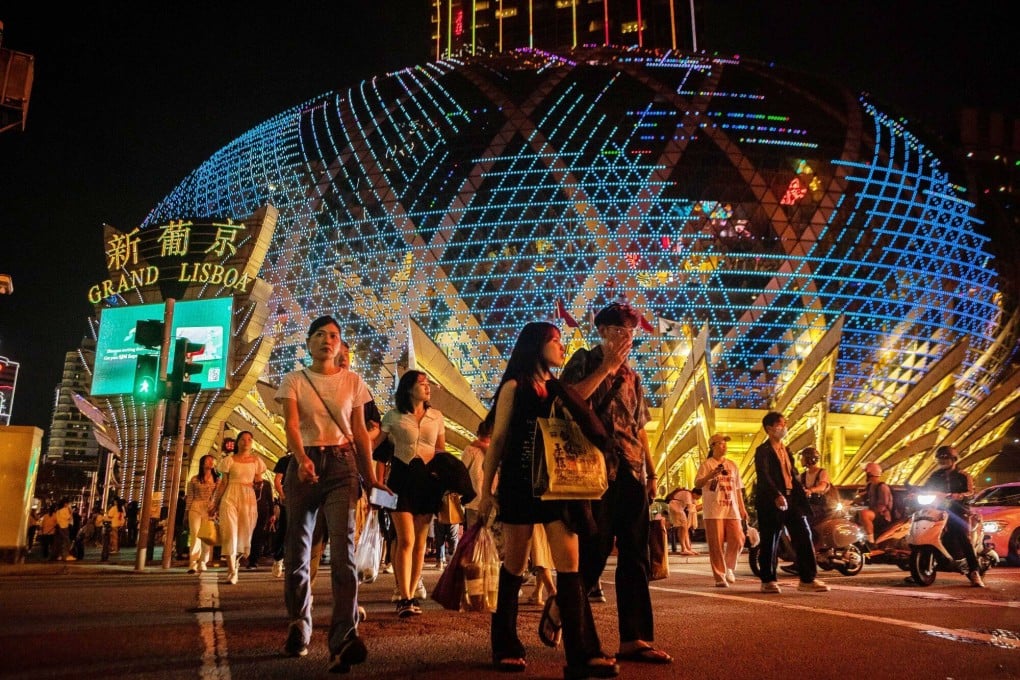
The Lunar New Year is Macau’s golden goose, a time when the city transforms into a magnet for tourists seeking luck, luxury, and a taste of its unique cultural tapestry. This year, the Macau Government Tourism Office (MGTO) anticipated up to 185,000 visitors per day. The reality, however, was slightly less dazzling. Over the first five days of the holiday, Macau welcomed 874,000 visitors—an average of 10,000 fewer per day than projected. While Friday’s peak of 219,000 arrivals offered a glimmer of hope, the overall trend was clear: Macau’s allure, while still potent, is not immune to the shifting tides of global travel.
Compounding the issue is the city’s struggle to attract international tourists. Despite a global campaign to woo Western travelers, only 4% of holiday visitors this year held foreign passports. This is a stark reminder of Macau’s reliance on mainland Chinese tourists, who account for the lion’s share of its revenue. The MGTO’s efforts to position Macau as a “preferred destination” for European travelers, as endorsed by the European Travel Agents and Tour Operators Association, have yet to bear fruit. The challenge is clear: how does a city known primarily for its casinos reinvent itself as a global cultural hub?

Beyond the Tables: Macau’s Push for Diversification
The answer lies in Macau’s ambitious five-year plan, a blueprint for reducing its dependence on gaming and fostering a more diversified economy. Under the leadership of newly installed Chief Executive Sam Hou Fai, the Special Administrative Region (SAR) is doubling down on non-gaming attractions. The goal is audacious: by 2028, non-gaming industries should account for 60% of Macau’s GDP. It’s a seismic shift for a city where casinos have long been the lifeblood of the economy.

This strategy is not just about economics; it’s about identity. Macau’s unique blend of Chinese and Portuguese heritage, enshrined in its UNESCO World Heritage status, offers a rich tapestry of culture, cuisine, and history. The Lunar New Year celebrations are a microcosm of this duality, featuring dragon and lion dances alongside Macanese cuisine—a fusion of East and West that predates the term “fusion” by centuries. By emphasizing these cultural assets, Macau aims to attract a broader, more diverse audience, one that values experiences over jackpots.
The Bigger Picture: A City in Transition
The Lunar New Year, while significant, is not the ultimate barometer of Macau’s success. As Seaport analyst Vitaly Umansky notes, the holiday’s impact on GGR is often mixed. In 2019, it accounted for just 2% of total revenue; this year, it was slightly higher at 2.7%. The real story lies in Macau’s ability to adapt to a changing world. The city’s “stable fundamentals,” as highlighted by Secretary for Economy and Finance Tai Kin Yip, provide a solid foundation for growth. But the path forward is fraught with challenges.
Macau’s transformation is a high-stakes gamble in its own right. Can it successfully pivot from a gaming-centric economy to a multifaceted cultural destination? Can it attract international tourists without losing its essence? And can it navigate the delicate balance between tradition and innovation? These are the questions that will define Macau’s future.

A Metaphor for Modern Macau
In many ways, Macau’s current predicament is a metaphor for the broader challenges facing the global tourism and entertainment industries. The city’s reliance on gaming revenue mirrors the world’s dependence on traditional economic models, while its push for diversification reflects the universal need for adaptation in an era of rapid change. The Lunar New Year’s underwhelming performance is not just a blip on the radar; it’s a wake-up call, a reminder that even the most glittering fortunes are not immune to the winds of change.
As the Year of the Dragon unfolds, Macau stands at a crossroads. The road ahead is uncertain, but one thing is clear: the city’s ability to reinvent itself will determine whether it remains a global icon or fades into the annals of history. For now, the dice are still rolling, and the game is far from over.


