

The “New Saudi Money League” is a term used to describe the recent influx of money into the Saudi Arabian professional football league, the Saudi Pro League (SPL). This influx of money has been driven by the Saudi government’s desire to make the SPL a more attractive destination for top talent.
The world of professional football is a realm of unparalleled glory and intense competition. In the realm of Europe’s top leagues, players in their prime are revered for their skills, physical prowess, and contributions to their teams. However, as the clock ticks past the age of 30, a footballer’s journey takes an intriguing turn. This article delves into the life of world-class players over 30 in European top leagues and explores what the future holds for these seasoned athletes on the global stage.

Prime Years: The Apex of Athleticism
Between the ages of 22 and 32, footballers experience their prime years, marked by peak physical condition, tactical understanding, and consistent on-field excellence. European top leagues are graced by these athletes, whose abilities propel them to the forefront of global football. During this period, players are integral to their teams, driving victories, setting records, and etching their names in football history.

Navigating the 30s: Challenges and Adaptations
As footballers venture into their 30s, a unique set of challenges emerges. Physical attributes like speed and endurance may start to wane, prompting players to adjust their playing styles. The key to longevity lies in adaptability—players often refine their skills, deepen their tactical understanding, and exhibit leadership on and off the field. The likes of Cristiano Ronaldo and Lionel Messi are prime examples of players who have seamlessly transitioned from powerhouses to experienced leaders.

European Top Leagues: A Changing Landscape
Historically, players beyond 30 were seen as approaching the twilight of their careers. However, modern sports science, nutrition, and injury management have shifted the paradigm. In European top leagues, players over 30 can still command starting positions due to their experience and mental acumen. Clubs are increasingly realizing the value of these seasoned campaigners as mentors to young talents and as sources of inspiration in high stakes matches.

The Global Stage: Beyond Europe’s Borders
While European top leagues remain the pinnacle of football, the world beyond offers diverse opportunities for players over 30. Emerging leagues in Asia, North America, and the Middle East, such as the Saudi Pro League, are eagerly recruiting experienced players to bolster their squads. The allure of new cultures, substantial contracts, and the chance to contribute to the growth of football in these regions presents a compelling narrative for players seeking fresh challenges.
Legacy and Beyond: Post-Retirement Pathways
As players edge closer to the end of their illustrious careers, the question of legacy looms large. Some footballers choose to transition into coaching, sharing their wealth of experience with the next generation. Others delve into media, punditry, or business ventures, leveraging their global brand to explore new avenues. In this era of connectivity, players have an unprecedented platform to engage with fans, making their post-retirement journeys all the more impactful.

Embracing the Future; Saudi Pro League
The life of a world-class professional footballer over 30 is a testament to resilience, adaptability, and the enduring love for the beautiful game. European top leagues, fueled by science and innovation, continue to be a haven for these players, while the global landscape beckons with fresh challenges and opportunities. As football transcends borders and cultures, players of this age group are poised to shape the game’s future, leaving an indelible mark on and off the pitch.
In this era of football evolution, the twilight years of a player’s career offer a canvas for a narrative that extends far beyond the final whistle—a narrative that speaks of passion, legacy, and the limitless potential of football’s mature maestros.
In recent years, the Saudi government has invested heavily in the SPL, increasing the prize money for winning the league and the King Cup, and providing financial backing for clubs to sign high-profile players. This has led to a number of big-name signings in the SPL, including:
- Karim Benzema (Real Madrid to Al Nassr)
- Gareth Bale (Real Madrid to Al Hilal)
- Paul Pogba (Manchester United to Al Nassr)
- N’Golo Kante (Chelsea to Al Nassr)
- Neymar (Paris Saint-Germain to Al Nassr)
The influx of money into the SPL has raised concerns about the league’s competitive balance. Some have argued that the big-money signings will give the richest clubs an unfair advantage, making it difficult for smaller clubs to compete. Others have argued that the increased spending will ultimately benefit the SPL as a whole, by raising the level of competition and making the league more attractive to fans and sponsors.
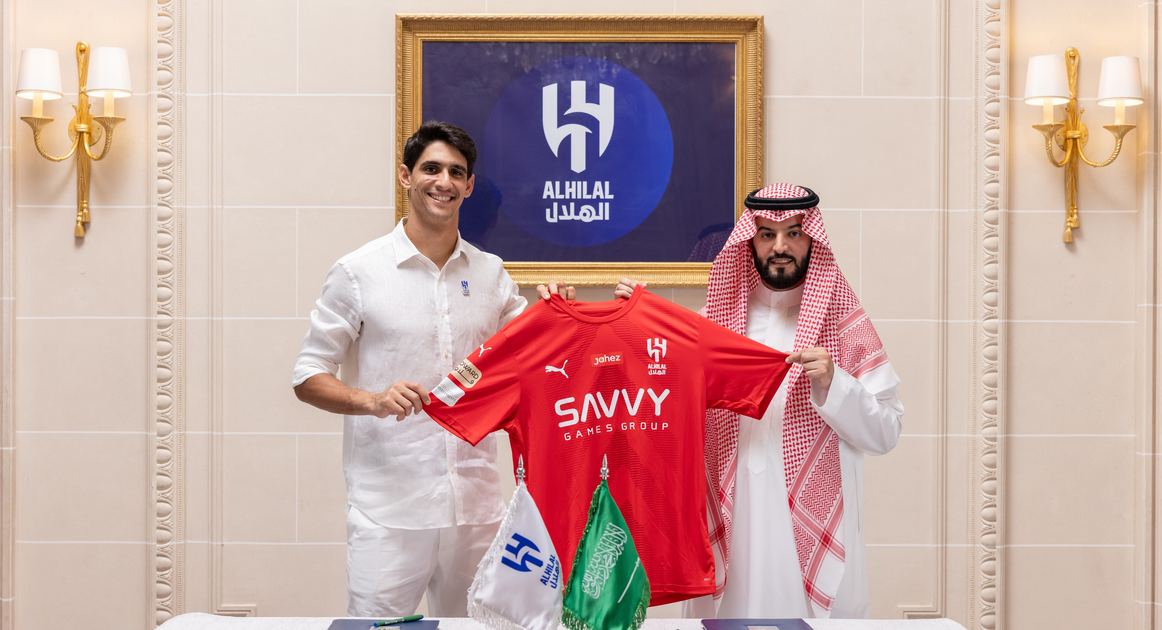
Only time will tell what the long-term impact of the “New Saudi Money League” will be. However, there is no doubt that it has already had a significant impact on the SPL, and it is likely to continue to do so in the years to come.
Here are some other things to note about the “New Saudi Money League”:
- The Saudi government has also invested in improving the infrastructure of the SPL, including building new stadiums and training facilities.
- The SPL has also signed a number of sponsorships deals with major international brands, such as Nike and Pepsi.
- The SPL’s ambitions extend beyond just attracting top talent. The league is also looking to become a more sustainable and professional league, and to increase its global visibility.
It remains to be seen whether the “New Saudi Money League” will be a success. However, there is no doubt that it is a bold and ambitious project that has the potential to change the landscape of professional football.


GIPHY App Key not set. Please check settings