

In the grand theater of Formula 1, where titans collide and legacies are forged in the furnace of competition, Lewis Hamilton delivered an emphatic declaration at the Chinese Grand Prix: the king is far from dethroned.
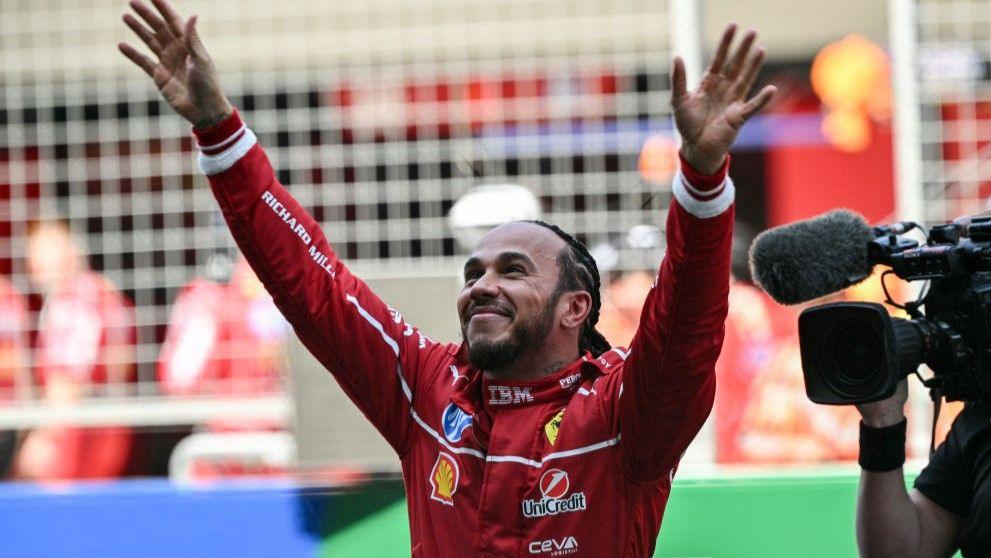
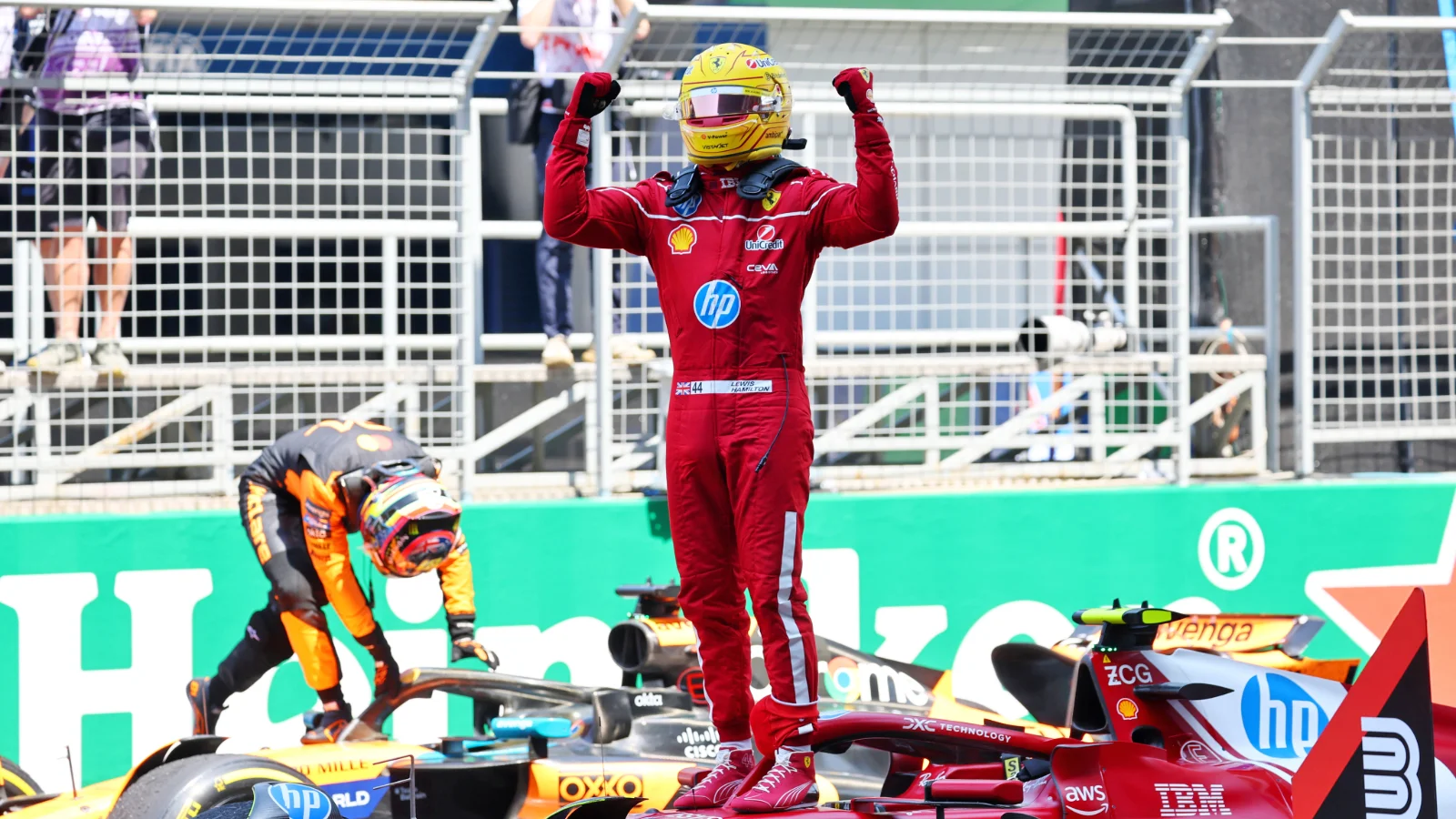
Just two races into his tenure with the prancing horse, Hamilton didn’t just win—he orchestrated a symphony of dominance, a masterstroke of experience, racecraft, and psychological fortitude. The seven-time world champion, now draped in Ferrari red, didn’t merely silence the doubters; he eviscerated their skepticism with an imperious sprint race victory that sent shockwaves through the paddock.
A Battle at Dawn: The Duel with Verstappen
As the lights went out, the stage was set for a gladiatorial clash. On one side, the reigning three-time champion Max Verstappen, a driver who has transformed relentless aggression into an art form. On the other, Hamilton, the veteran whose instincts are sharper than ever. The first corner was always going to be a test of nerves, a high-stakes chess move played at 200 mph.
Hamilton, ever the tactician, positioned his Ferrari with the precision of a grandmaster, forcing Verstappen to play on his terms. As Verstappen lunged in, the Briton held firm, using the track limits to squeeze the Red Bull into submission. The duel was short-lived. The moment Verstappen fell back, Hamilton’s strategic genius took center stage.
Taming the Beast: The Art of Tyre Mastery
If the first few laps were a battle of reflexes, the rest of the race became a test of intelligence. Formula 1 is often reduced to raw speed, but in reality, it is an intricate balance of conservation and aggression—a paradox Hamilton has mastered like no other.
On a Shanghai circuit with newly laid tarmac and punishing tyre degradation, the field wrestled with rubber that refused to comply. Verstappen, uncharacteristically vulnerable, began to hemorrhage time as his tyres deteriorated. McLaren’s Oscar Piastri, a driver on the rise, smelled blood and executed a ruthless overtake, relegating the once-dominant Red Bull to a mere spectator.
And then there was Hamilton, an artist on a different canvas. With the delicacy of a sculptor chiseling away at marble, he managed his tyres with a finesse that defied physics. His Ferrari, once a machine of unpredictability, danced to his rhythm. The whispers of his doubters, the murmurs of his critics, all dissolved in the air as he crossed the finish line—first, unchallenged, and undisputed.
The Psychology of a Champion: Defying the Narrative
Greatness in sport isn’t merely about talent; it’s about resilience. Hamilton’s Ferrari debut in Australia had been underwhelming, an uncharacteristic stumble that fed the narrative of decline. But those who truly understand elite performance know that champions do not crumble under scrutiny—they transmute doubt into fuel.
“I woke up feeling great today,” Hamilton said post-race, his words dripping with an undertone of vindication. The unspoken message? Underestimate me at your peril.
There’s a rare psychological trait among the elite—a deep, almost meditative self-belief. The greats don’t allow external narratives to shape their identity. Instead, they impose their reality onto the world. Hamilton’s journey with Ferrari is a testament to this philosophy. The man who has broken records at Mercedes is now writing an entirely new chapter with Ferrari, and if China was any indication, this story will be worth the read.
The Domino Effect: What This Means for the Championship
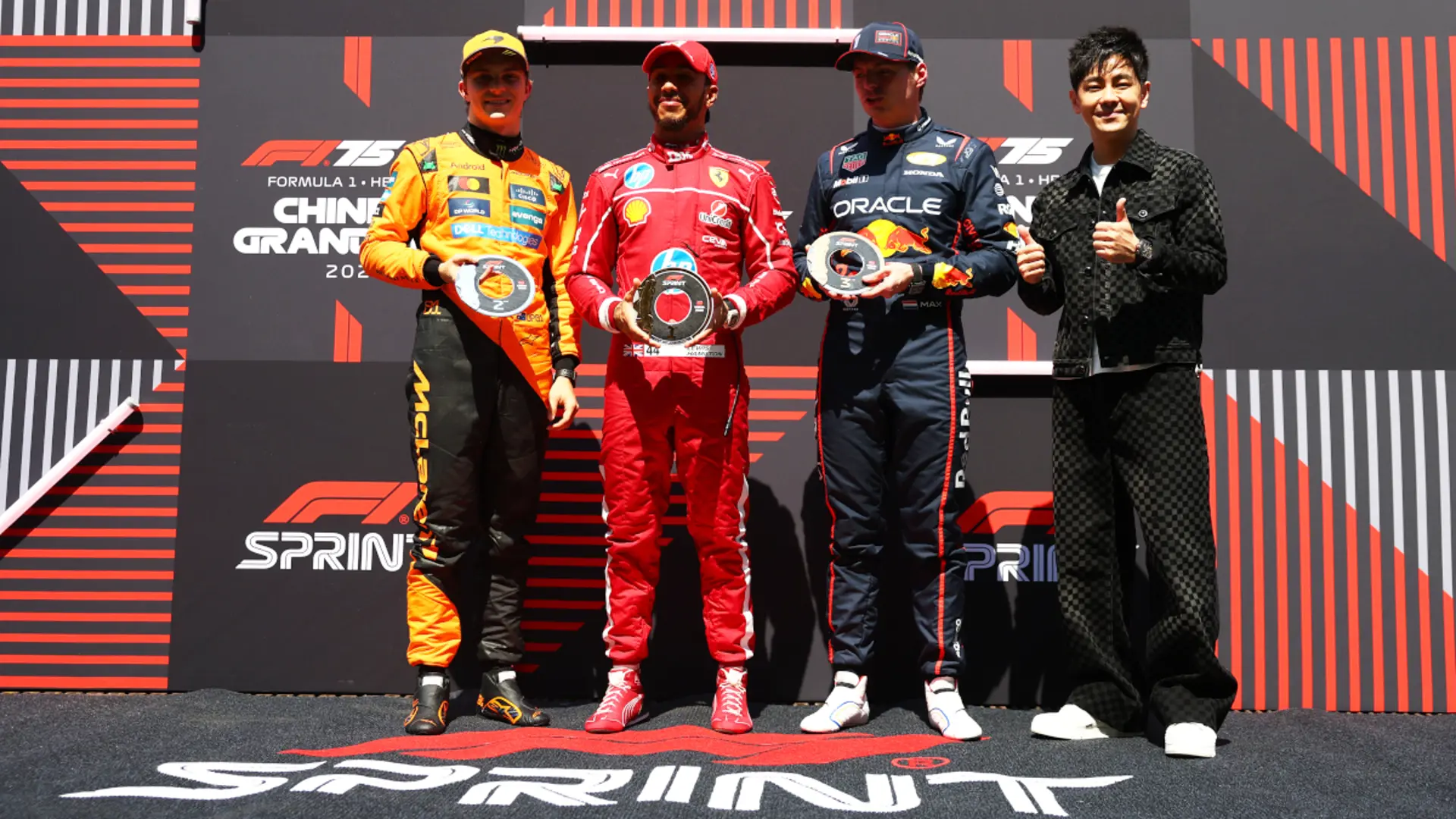
Beyond the personal triumph, Hamilton’s win has ignited the championship race into a firestorm of uncertainty. Verstappen’s P3 finish means that McLaren’s Lando Norris—despite his own struggles—maintains a precarious two-point lead. The once-unstoppable Red Bull is showing cracks, its Achilles’ heel now exposed for all to see.
Meanwhile, the underdogs are rising. Oscar Piastri’s confident second-place finish signals that McLaren is no longer just a nuisance to Red Bull—it is a genuine threat. George Russell’s bold overtake on Charles Leclerc further cements Mercedes’ relevance in the championship fight. Even Racing Bulls’ Yuki Tsunoda turned heads with an exceptional drive, proving that the midfield is no longer just filler content—it is an active battlefield.

The Legacy Continues: Hamilton’s Next Move
If there’s one lesson to be taken from this race, it’s that Lewis Hamilton is still one of the most dangerous men on the grid. His detractors will need a new script, for the one they’ve been reading from—about age, about adaptation, about decline—was shredded under the neon lights of Shanghai.
This wasn’t just a victory; it was a manifesto. Hamilton didn’t just win a race—he sent a message. And if history has taught us anything, it’s that when Hamilton gets into his groove, the rest of the field should brace for impact.


