in , ,

Why Losing the Premier League Could Gift Barcelona Their Next Messiah – The Arteta Paradox

The Emirates Stadium holds its collective breath. Two consecutive defeats. Slipped to second on goal difference. Manchester City’s shadow looming large. For Arsenal fans, the nightmare of another trophy-less campaign is metastasizing into cruel reality. But while North London stares into the abyss, a thousand miles away in Catalonia, a very different emotion is stirring: hope. Because former Barcelona defender Miguel Nadal has just lit a fuse that will send shockwaves through both continents—Mikel Arteta does not need to win the Premier League to become Barcelona’s next legendary coach. In fact, failing to do so might be the very thing that seals his destiny at the Camp Nou.

Mikel Arteta unfazed by criticism of Arsenal celebrations


The Bombshell: “DNA Over Silverware”

In an explosive interview with BetBrothers, Miguel Nadal—a revered figure from Barcelona’s storied past—delivered a verdict that will rattle the corridors of power at both the Emirates and the Camp Nou. According to Nadal, Arteta’s candidacy for the Barcelona job is entirely independent of whether he delivers a league title to Arsenal. The Spaniard’s tactical identity, his La Masia upbringing, and his apprenticeship under Pep Guardiola have already sealed the deal in the eyes of those who understand the Blaugrana’s soul.

4,091 Camp Nou Stock Photos - Free & Royalty-Free Stock Photos from Dreamstime

“Barcelona have had some of the best coaches without them coming preceded by titles,” Nadal declared. “Guardiola came from the B team, Luis Enrique too. It is about seeing a personality, a style that can naturally adapt. Arteta started with Guardiola, but now at Arsenal he is having a brilliant spell. I think that regarding coaches, it is not always necessary to look at whether the CV was preceded by titles or not. It is also about seeing something different. Not only because he was a Barcelona player, I still think he has a place in carrying the weight of the team.”

Nadal’s words are not casual praise—they are a strategic roadmap. He argues that Barcelona’s most successful modern eras were not born from serial winners arriving with overflowing cabinets, but from coaches who possessed the “Cruyffian” essence: possession dominance, positional intelligence, and the psychological fortitude to rebuild fallen giants. Arteta’s transformation of Arsenal from a fractured, banter-era outfit into a ruthless, possession-based machine is, in Nadal’s eyes, the perfect dress rehearsal for the Camp Nou’s main stage.


The Arsenal Audition: Brilliant But Unfinished

Let there be no mistake: Arteta’s work in North London has been nothing short of revolutionary. He inherited a squad bereft of identity, a club that had forgotten how to win or even compete. Today, Arsenal are perennial title challengers, playing football that draws constant comparisons to Guardiola’s Manchester City and, indeed, to peak Barcelona. The high press, the tactical fouls, the full-backs inverting, the obsessive build-up from the back—it is a system born from the same intellectual bloodline that produced Johan Cruyff, Pep Guardiola, and Luis Enrique.
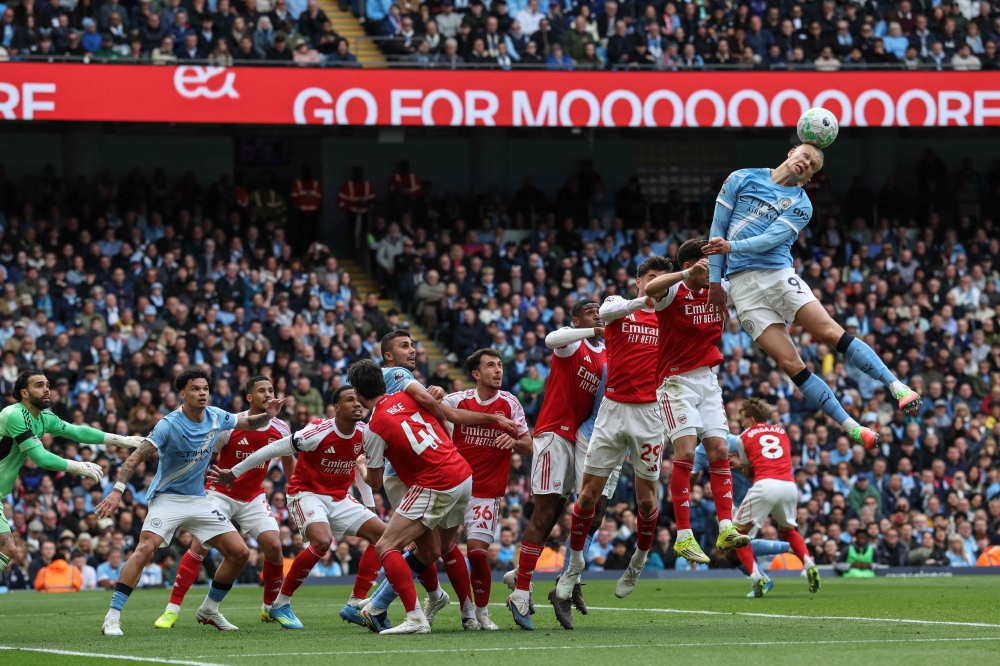
Spurs under pressure while Arsenal chase glory in decisive Premier League weekend | Malay Mail

Yet the brutal reality of the 2025/26 Premier League season is this: Arsenal have stumbled at the worst possible moment. Back-to-back defeats have allowed Manchester City to leapfrog them on total goals scored, with the defending champions now holding the psychological high ground. The title that once seemed destined for the Emirates is now balanced on a knife’s edge. And if it slips—if Arteta becomes the nearly-man who rebuilt a giant but couldn’t crown it—the narrative will be merciless.

Or so you would think. Nadal’s intervention flips that narrative entirely. In his eyes, the very fact that Arteta got Arsenal this close—restoring standards, managing egos, instilling a winning culture—is more impressive than actually crossing the finish line. Why? Because Barcelona are not looking for a mercenary who hoovers up trophies in a one-team league. They are looking for a constructor. A philosopher. A leader who can carry the weight of a club that has been financially and spiritually battered in recent years.


The Twist: The Poisoned Chalice That Isn’t

And here lies the scintillating, almost cruel irony for Arsenal supporters. The same Premier League title race that is causing sleepless nights in Islington may actually be the very catalyst that prises Arteta away from them. Nadal’s logic suggests that if Arteta wins the league, he becomes a hero forever enshrined in Arsenal folklore—but also a man who might feel his project is complete. If he loses, however, he becomes a hungry, wounded, unfulfilled genius—exactly the profile that Barcelona have historically pounced upon.

Arsenal vs. Manchester City score, highlights: Gunners destroy Pep Guardiola's side in Premier League clash - CBS Sports

Consider the precedent: Guardiola arrived at Barcelona’s first team in 2008 after a single season coaching the B team. No major trophies. No Champions League medals as a manager. Just a philosophy, a personality, and an intimate understanding of the club’s soul. He went on to win six trophies in his first year. Luis Enrique followed a similar path. Nadal is not speculating—he is drawing a direct line from that history to Arteta’s future.

The message to Barcelona’s board is crystal clear: Do not wait for Arteta to fail or succeed at Arsenal. Do not judge him by Premier League medals. Look at what he has built. Look at how his players run through walls for him. Look at the tactical sophistication that has turned Declan Rice into a metronome and Bukayo Saka into a world-beater. That, Nadal argues, is the “something different” that cannot be taught—and cannot be ignored.


A Looming Transfer Battle of Minds

For now, Arteta remains publicly committed to Arsenal. His immediate priority is navigating the final, treacherous weeks of the Premier League season and attempting to wrestle the title back from City’s grasp. But behind the scenes, Nadal’s comments will have been noted—and likely welcomed—by influential voices within the Camp Nou boardroom. Barcelona are currently managed by [current coach name, if known; otherwise use “an interim solution”], but the club’s long-term vision has never been settled. Arteta’s name has now been publicly anointed by a respected club insider.

Arsenal vs Manchester City score, result and highlights as Gunners win Community Shield on penalties | Sporting News

The coming months will not just be about trophies. They will be about narratives. Every Arsenal defeat will be analyzed through a Catalan lens. Every tactical masterclass will be framed as a job interview. And if Arteta does ultimately fall short of the Premier League title, don’t be surprised if Barcelona’s phone call comes not as a consolation prize, but as a coronation.

Because in the upside-down logic of European football’s most romantic and ruthless club, losing the battle for England might just be the first step toward winning the war for Spain. And Mikel Arteta, the student of Guardiola and the rebuilder of Arsenal, may find that his greatest masterpiece is yet to be painted—not in North London, but beneath the towering grandstands of the Camp Nou.

The twist, then, is this: Arsenal fans might soon face a choice they never imagined—root for their manager to win the title to keep him, or watch him leave as a “failure” to become Barcelona’s next deity. Either way, Arteta’s legend is only just beginning.

Written by dotunmi

Serial Entrepreneur | Gaming Professional | Author | Publisher

‘Dotun Ajegbile, PMP is the publisher of Punters Digest Newspaper and Blogs; a visionary entrepreneur, strategic business leader, and industry expert with over 15 years of experience in the sports betting, gaming, and new media industries. His passion for business development, leadership, and strategic innovation has positioned him as a trailblazer in his field.

Respecting the ball, losing the players – inside Rosenior’s reign Liam Rosenior Image source,Getty Images Image caption, Liam Rosenior managed Chelsea 23 times, winning 11, losing 10 and drawing two BySami Mokbel, Senior football correspondent and Nizaar Kinsella, Football reporter Published 22 April 2026 891 Comments Less than four months after he signed a five-and-a-half-year deal with Chelsea, Liam Rosenior’s stint at Stamford Bridge has come to an abrupt end. The 41-year-old replaced Enzo Maresca in January. Ten defeats in 23 matches later, he has gone. Rosenior arrived with a burgeoning reputation for playing attractive football, having led Ligue 1 Strasbourg into Europe for the first time in eight years during his debut season in France. So where did it all go wrong at Chelsea? Rosenior’s authority waned as results worsened 01:54 Media caption, ‘Chelsea join the Premier League managerial merry-go-round’ By Nizaar Kinsella Football reporter Rosenior’s tenure ended less than 24 hours after he publicly criticised his players in the wake of Tuesday’s defeat at Brighton – an episode that lay at the heart of what ultimately went wrong for the Englishman. It was not for a lack of trying. Rosenior often defended his players, sometimes to his own detriment. His comments about the team “respecting the ball” followed an attempt to justify a pre-match huddle – an idea from his leadership group, rather than Rosenior himself – in which the players encircled referee Paul Tierney before a 1-0 defeat by Newcastle at Stamford Bridge in March. That episode may ultimately define his tenure. It marked the start of a run of five defeats without scoring, Chelsea’s worst such sequence in 114 years, leading to his exit. But there were signs in the early days of Rosenior’s short reign that the dressing room were unimpressed with him. Despite relative success at Strasbourg, the former Hull City boss had never managed in the Premier League. Views within the squad were mixed, but the Spanish-speaking contingent were particularly unconvinced. That was reflected in comments made by Marc Cucurella and Enzo Fernandez during the March international break, in which both talked up moves to Spain. Multiple sources told BBC Sport that leadership meetings became increasingly quiet as Rosenior’s tenure began to unravel, with the head coach struggling to generate the level of participation he had hoped for. Further evidence was provided by team news leaks around both legs of their Champions League last-16 tie against Paris St-Germain, which sources say originated from within the dressing room. A leak before Rosenior’s final match at Brighton remarkably seemed to come from Cucurella’s barber. There was also footage of players on a near-weekly basis appearing to snub Rosenior’s inexperienced backroom staff, including a recent video that showed Wesley Fofana ignoring assistant James Walker after a home defeat by Manchester United. One player even gave him the nickname “the supply teacher”. Privately, sources close to several players have confirmed that Rosenior began to lose authority as he attempted to implement more of his own ideas, having initially leaned on Maresca’s blueprint during his first six weeks in charge, amid limited time on the training pitch. Key tactical decisions also came under scrutiny. One source close to PSG said they felt Rosenior’s approach over the two legs of the tie was too open, allowing the French champions to exploit Chelsea in an 8-2 aggregate win. The decision to start young centre-back Mamadou Sarr at right-back also proved costly in the second leg, with his error leading to an early Khvicha Kvaratskhelia goal as PSG won 3-0 on the night. In addition, Moises Caicedo was said to be covering too much ground following a shift from a double pivot – two defensive midfielders – to a single pivot. It was not all negative. Most players were said to regard Rosenior as a thoroughly decent person and he was known, according to one source, to be more popular with English members of the squad. However, injuries to Trevoh Chalobah, Cole Palmer and Reece James later in his spell further complicated matters. Chelsea decided to act after Brighton There were glum faces in the directors’ box as Chelsea failed to compete against Brighton, in what one senior source described as a turning point in the club’s stance on Rosenior. Until then, those responsible for his appointment had hoped he would come good – at least enough to steady the ship until the end of the season. But, ultimately, it was felt Chelsea would have a better chance without Rosenior in charge for the remaining matches, both in their bid to qualify for European competition and in their pursuit of FA Cup success, with a new voice required. Unlike Maresca, Rosenior did not retain the same positive relationships within the hierarchy – something reflected in his exit statement, which was 68 words shorter than that of his predecessor. It was a decision taken to benefit Chelsea in the short term, but one also viewed as potentially aiding the club’s long-term ambitions. Who next for Chelsea and BlueCo? By Sami Mokbel Senior football correspondent Chelsea remain one of European football’s biggest draws – and despite this season’s difficulties, high-profile managers will inevitably be attracted to the vacancy. Marco Silva, the Fulham manager, is set to be a candidate for the position this summer. The Portuguese’s deal expires at the end of the season, meaning Chelsea would not have to pay Fulham or negotiate to release him from a contract. The fact he is represented by agent Jorge Mendes, who has a close relationship with Chelsea’s ownership, would also ease any move for Silva. That said, sources have told BBC Sport that working within the club’s current model is causing hesitation from coaches who would normally be considered for the role. For instance, outgoing Bournemouth head coach Andoni Iraola is of interest to Chelsea’s leadership group – but those close to the Spaniard have indicated he will prioritise stability at his next post – not a trait associated with Chelsea at present. In addition, the 43-year-old is understood to want to return with his family to Spain after deciding against signing a new Bournemouth deal. Edin Terzic, who led Borussia Dortmund to a Champions League final in 2024, is under consideration, while former Chelsea midfielder Cesc Fabregas is earning rave reviews at Serie A club Como. Xabi Alonso is out of work, having left Real Madrid earlier this season. The question is whether any of those names, if approached, would express reservations about working within the Chelsea recruitment model – of bringing in younger players who can develop. And then there is the club’s recent history of dispensing with managers. That said, Chelsea are understood to be contemplating a change in approach this summer with a view to targeting more experienced signings to complement their young team. Landing more established talent this summer may be easier said than done. The club recently posted a £262.4m loss for the 2024-25 season – the highest pre-tax loss in Premier League history. That, coupled with the prospect of missing out on Champions League football, is expected to restrict spending in this summer’s transfer window. The club remain confident they can attract the right coach, though they are not in active talks with any candidates and do not expect to appoint a full-time replacement until the end of the season. They are looking for someone who can win matches and, ultimately, deliver trophies.

Why Chelsea’s Next Manager Is a Two-Horse Spanish Shootout Between the Safe Hand and the Club Legend